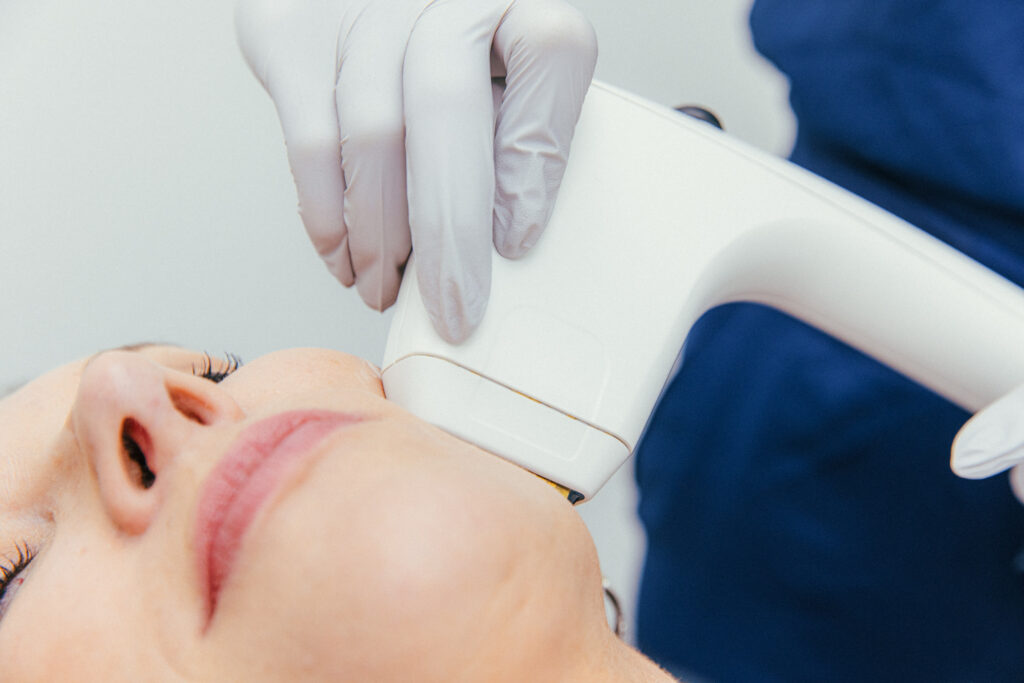
For patients exploring skin tightening in NYC, there’s a wide range of technologies designed to improve the appearance of skin laxity, firmness, texture, and visible signs of aging. Ultrasound. Radiofrequency. Plasma. Heat-based treatments. Different devices use different forms of energy, different treatment depths, and different approaches to stimulating collagen.
So what actually makes one skin-tightening treatment effective?
The type of energy, where that energy is delivered, how consistently it reaches its target, and how your skin responds to the treatment all matter. Just as important is matching the technology to the problem you’re actually trying to address.
Having treated everyone from executives and busy New Yorkers to Broadway actors and Grammy-award-winning musicians, Dr. Akis has extensive experience creating natural, refined results. He is a doctorate-prepared clinician educated at Johns Hopkins and co-founder of Aion Aesthetics, awarded Best Med Spa on the East Coast by the Aesthetic Everything Awards.
Dr. Akis’ primary technologies for non-invasive skin tightening include Sofwave, Plasma Pen, and SkinTyte, giving patients access to a variety of approaches depending on their skin, anatomy, and goals.
Here’s what to know about how these treatments work—and why depth and collagen matter so much.
What Causes Skin to Lose Its Firmness?
Skin laxity is a normal part of aging, but there isn’t a single cause.
As we get older, the skin gradually produces less collagen and elastin. Collagen provides structural support, while elastin helps skin stretch and return to its original shape. Beyond that, changes in the fat compartments beneath the skin, bone structure, and connective tissues affect how your face looks.
The changes are usually subtle at first. Your jawline may look slightly less defined. Fine lines may become more noticeable. The skin around the lower face or neck may not feel quite as firm as it once did.
Skin tightening treatments stimulate a biological response in the skin rather than physically remove excess tissue. Many energy-based skin tightening treatments deliver controlled energy to targeted tissue, creating a thermal response designed to stimulate collagen production and remodeling.
Why Treatment Depth Matters
The skin and underlying tissues are composed of distinct layers, and different energy-based technologies are designed to target different tissue depths. Some primarily affect the surface, while others are designed to deliver energy deeper into the skin or underlying tissue.
For skin tightening, this is important because collagen remodeling needs to happen where the effects are intended.
Sofwave takes a particularly targeted approach. Its proprietary Synchronous Ultrasound Parallel Beam (SUPERB™) technology delivers controlled ultrasound energy into the mid-dermis, creating a thermal response designed to stimulate collagen remodeling while integrated cooling helps protect the skin’s surface.
That combination—controlled energy delivery at a defined depth with surface cooling—is central to how Sofwave is designed to work
It also helps explain why comparing skin-tightening technologies based only on whether they “use heat” doesn’t tell you very much. Two treatments can both create a thermal response while delivering energy differently and affecting different layers of tissue.
What Does Collagen Have to Do With Skin Tightening?
Your skin is constantly making and breaking down collagen. With age, that balance changes. Collagen production declines with age, while changes in collagen and elastin contribute to a gradual loss of skin firmness and elasticity. That makes collagen a key part of the skin-tightening equation.
The goal of a collagen-stimulating treatment isn’t to instantly replace that lost structure.
Instead, controlled energy is used to create a thermal stimulus that encourages the body’s natural remodeling process. Over time, new collagen can contribute to improvements in firmness, texture, and the appearance of lines.
This is also why skin tightening isn’t an overnight process.

Some patients may notice early changes after treatment, while collagen remodeling and visible improvement can continue developing over the following weeks and months.
For patients considering skin tightening in NYC, this distinction is worth understanding. A treatment that relies on collagen remodeling is fundamentally different from a procedure that physically removes or repositions tissue.
Why Sofwave Is Used for Skin Tightening
Sofwave was designed specifically around controlled ultrasound delivery to the mid-dermis.
Rather than treating the skin’s surface alone, its SUPERB technology uses multiple parallel ultrasound beams that converge at a predetermined depth. The resulting thermal effect is intended to stimulate collagen while the cooling system helps maintain patient comfort and protect the epidermis.
Sofwave is non-invasive, meaning there are no needles or surgical incisions involved. Treatment can typically be completed in about 45 to 90 minutes, depending on the areas being treated.
At Aion Aesthetics, Dr. Akis may recommend Sofwave for concerns including facial lines and wrinkles, early jawline softening, and laxity beneath the chin or along the neck, with the goal of achieving gradual, natural-looking improvement.
Skin Tightening in NYC: How Does Sofwave Compare With Other Options?
Sofwave isn’t the only way to approach skin tightening, and there isn’t one technology that makes sense for every patient.
At Aion Aesthetics, treatment options include Sofwave, Plasma Pen, and SkinTyte. Each uses a different approach, which is why the consultation matters.
Sofwave
Sofwave uses ultrasound energy delivered to the mid-dermis to create a controlled thermal effect that stimulates collagen remodeling.
It may be appropriate for patients seeking a non-invasive treatment for mild skin laxity, facial lines and wrinkles, and other visible signs of aging without surgery.
PlasmaPen®
PlasmaPen uses controlled plasma energy to create localized thermal effects at the skin’s surface, encouraging tissue contraction and collagen remodeling. Unlike Sofwave, which delivers ultrasound energy into the mid-dermis, PlasmaPen uses a surface-focused approach that may help improve the appearance of fine lines, wrinkles, skin texture, and mild skin laxity.
Because PlasmaPen works differently from ultrasound-based skin tightening, it’s not simply another version of Sofwave. The right choice depends on the concern being treated and the desired outcome.
SkinTyte
SkinTyte uses infrared light to deliver controlled heating to the dermis, while cooling helps protect the skin’s surface. It is a non-invasive treatment designed to improve the appearance of skin laxity and firmness.
Like Sofwave, SkinTyte relies on the body’s response to controlled thermal energy rather than surgery. But the energy source and way it interacts with tissue are different.
This is where the concept of energy + depth + collagen becomes useful. Instead of asking which device is universally best, it’s more helpful to ask:
What is the treatment designed to affect, and does that match your skin and your goals?
Does More Energy Mean Better Results?
Not necessarily.
It’s easy to assume that a stronger treatment must produce a better result. But skin tightening isn’t simply a matter of turning up the heat.
Too much energy, poor energy distribution, or inappropriate treatment depth can create unnecessary risk without necessarily producing better results.
Effective treatment depends on controlled energy delivery and appropriate patient selection.
Provider experience, patient selection, anatomy, treatment settings, and technique all influence the experience and outcome. Technology is only one part of the equation.
A thoughtful treatment plan isn’t about using the most aggressive option available. It’s about using the appropriate technology and delivering it appropriately.
Who Is a Good Candidate for Non-Invasive Skin Tightening in NYC?
Non-invasive skin tightening options are worth considering if you’re beginning to notice changes such as:
Early jawline softening
Mild skin laxity
Fine lines and wrinkles
Changes in skin firmness
Mild laxity around the neck
Changes in overall skin texture
These treatments are generally better suited to mild to moderate changes than significant excess skin.
If someone has substantial skin laxity or wants a major structural change, a surgical procedure may be more appropriate. That’s an important part of an honest skin-tightening consultation: sometimes an energy-based treatment isn’t the right tool for the job.
The goal isn’t to convince every patient that they need a device. It’s to determine what approach makes sense for the anatomy and result they’re actually looking for.
The Bottom Line on Skin Tightening in NYC
Effective skin tightening is about more than heating the skin.
Technology matters. The energy source matters. The treatment depth matters. And perhaps most importantly, the biological response you’re trying to create matters.
Sofwave takes a targeted ultrasound approach, delivering energy to the mid-dermis to stimulate collagen remodeling while cooling the skin’s surface. Plasma Pen and SkinTyte offer different approaches to skin tightening and skin rejuvenation, which may make them appropriate for different concerns.
At Aion Aesthetics, the goal is not simply to offer a menu of devices. It’s to understand what is changing in your skin and choose a treatment that makes sense for your anatomy, goals, and degree of skin laxity.
If you’re considering non-invasive skin tightening in NYC, a consultation with Dr. Akis can help determine which treatment approach may be appropriate for your skin, anatomy, degree of laxity, and goals. Aion Aesthetics offers personalized skin tightening treatments at our Upper East Side and NoMad locations in Manhattan.